
01 — What to know first
What to know first
In Finland, children are introduced to sauna bathing early, but cultural tradition is not a universal paediatric recommendation. Age alone is not enough: health, the child's ability to describe discomfort, temperature, session length and continuous supervision all matter.
The safest approach is brief, moderate and voluntary. A child should sit on a lower bench, be able to leave with an adult at any time, and never be forced to tolerate steam or cold immersion. Babies and toddlers cannot reliably say that they are overheating.
02 — Expert sources
What the expert sources show
Children react differently to heat
A review of thermoregulation in prepubertal children describes differences in sweating, body-surface-area ratio and physiological responses to heat. Most data come from exercise in the heat rather than sauna use, so they cannot be converted directly into an exact time limit.
Open source · PubMedBrief sessions, hydration and supervision
The Finnish Sauna Society states that young children overheat faster, should be able to leave at any time and need supervision and plenty of fluids. Sauna is not recommended with a fever, and children with heart or respiratory conditions need medical advice.
Open source · Finnish Sauna Society03 — Practical context
How to use this in practice
- 01
Smaller body, different thermal balance
The ratio of body surface to weight is greater in young children. They receive and lose heat differently than adults.
- 02
Less reliable communication
A child may become quiet, tired or irritable before saying that they feel unwell. An adult must monitor behaviour, skin colour and alertness.
- 03
No proven 'immune training'
Short-term changes in blood cells do not prove that a child will fall ill less often. Sauna should not replace vaccination, adequate sleep or treatment.
04 — Understanding the research
How to interpret the research
Study design matters
A randomised trial, an observational cohort and a laboratory mechanism do not provide equally strong evidence.
Association is not causation
Even a long-term association can reflect exercise, diet, income or other differences between people.
Protocols and people vary
Temperature, humidity, duration, health and experience affect the response; one study is not a universal prescription.
05 — When to be cautious
When to be cautious
Fever, infection, vomiting or diarrhoea
Skip the sauna. A child can overheat and dehydrate more easily.
Hot surfaces and steam
The heater, hot water and metal parts can cause burns. A child must always remain within an adult's reach.
Forcing cold or stamina
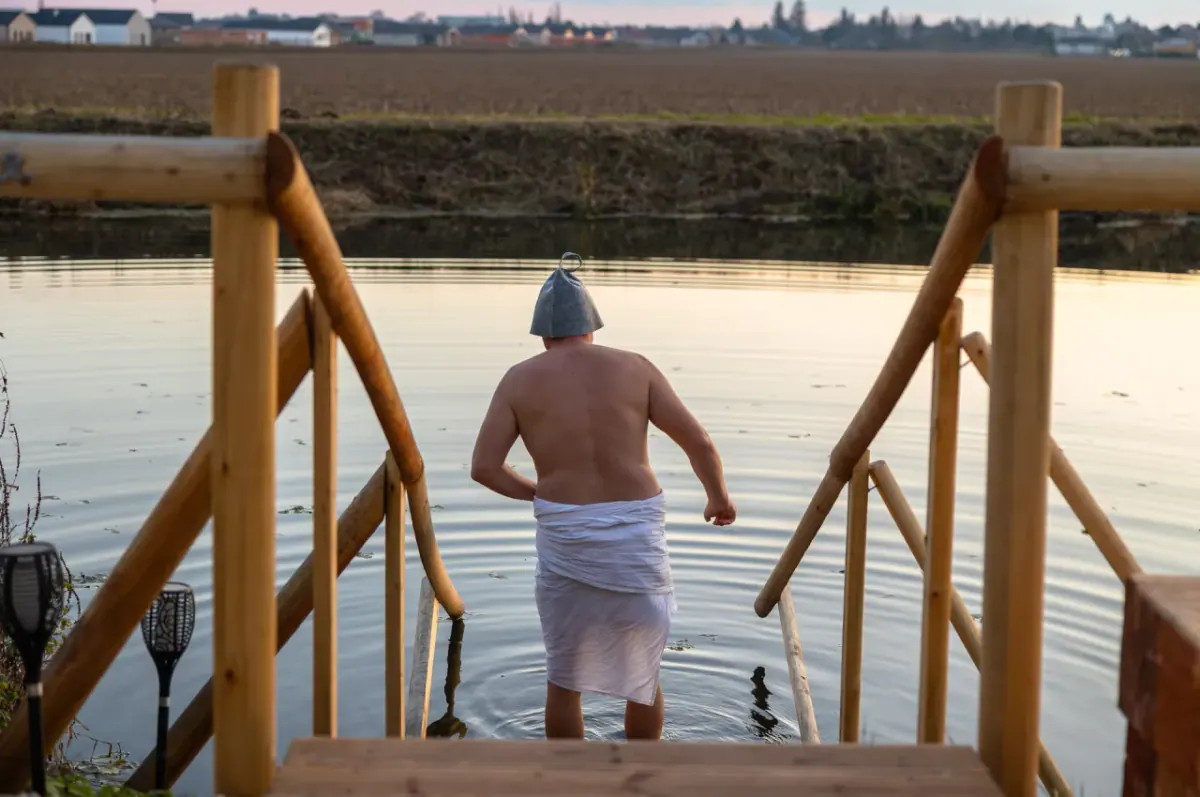
Neither a cold dive nor a set number of minutes is a requirement. In case of discomfort, the ritual ends immediately.
This article is educational and does not replace individual medical advice. If you have a chronic or unstable condition, are pregnant, or take medicines that affect blood pressure or temperature regulation, speak to your clinician.
06 — Summary
The key points
High-quality direct studies of sauna use in children are very limited and do not demonstrate infection prevention. Heat physiology and expert Finnish guidance support only brief, moderate exposure for a healthy child under continuous supervision.
If you want to introduce your child to sauna bathing, discuss it with a paediatrician, especially if the child is very young or has a medical condition. Start briefly with little steam and leave at the first 'I don't want to' — even if only two minutes have passed.
The family ritual must remain safe
Privacy gives you the calm to adapt the whole visit to your child, rather than to the pace of an unfamiliar group.